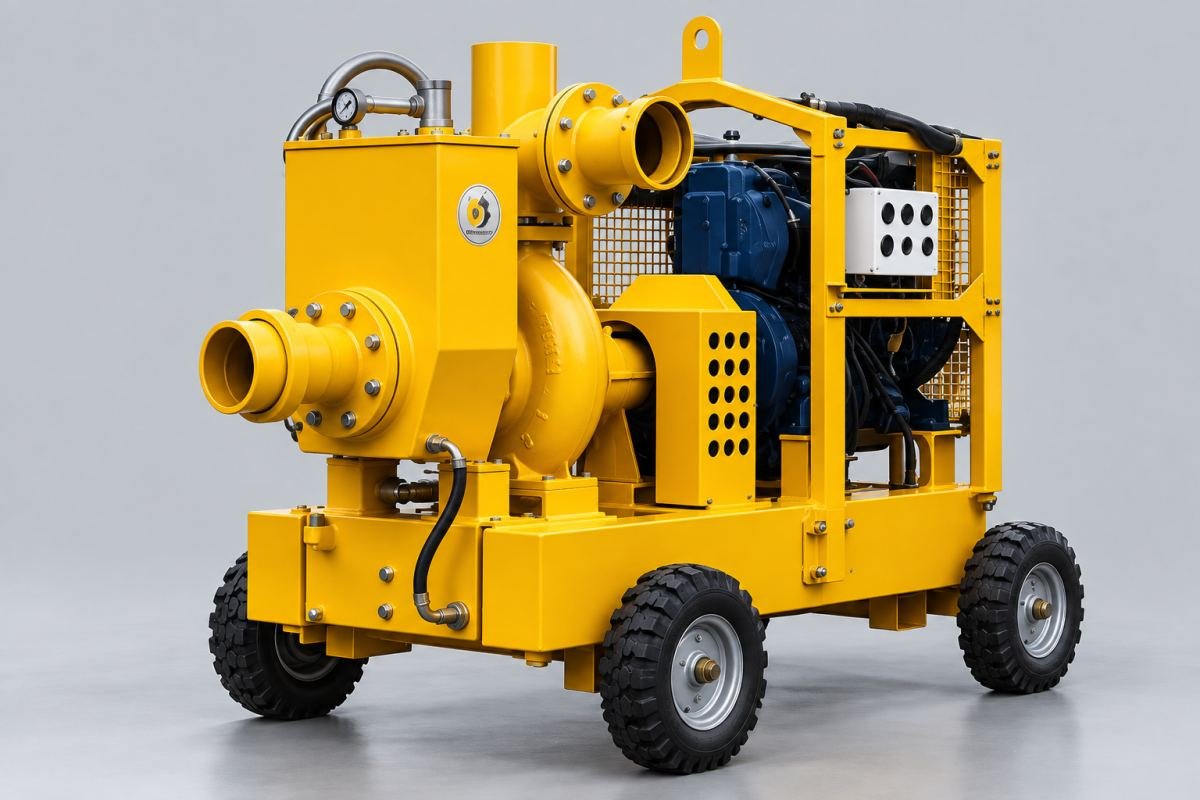
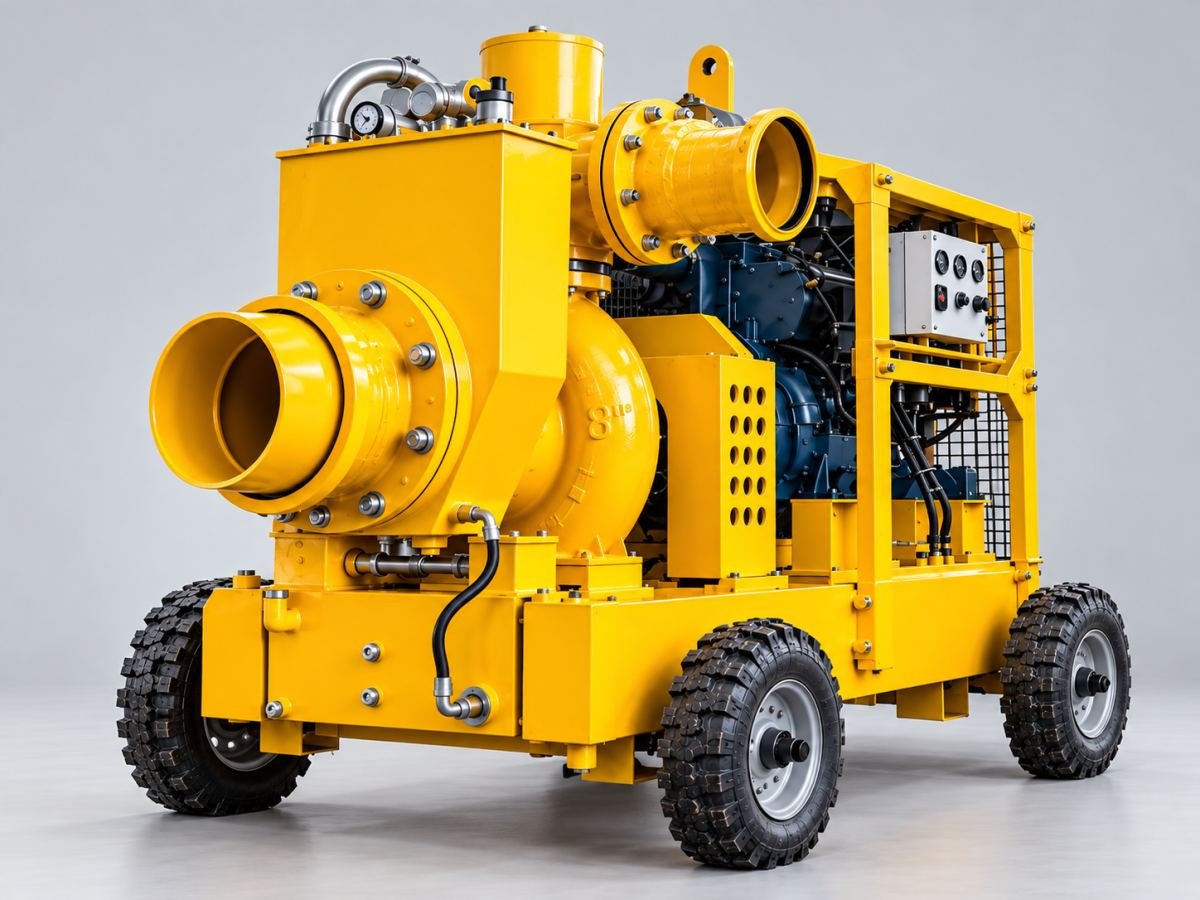
When a dewatering duty has been defined, one of the next decisions is how the pump will be driven. Diesel-driven and electric pumps can often be configured to meet the same flow and total head, so the choice usually comes down to the site rather than the hydraulics. This article compares the two options in general terms and sets out the questions that help a project team decide.
Same hydraulics, different drive
The pump end, meaning the casing, impeller and suction and discharge connections, determines how the unit performs against its performance curve. The drive provides the power to turn it. Whichever drive is chosen, the selection still starts with the duty point: flow, total head, suction conditions and fluid. Maximum flow and maximum head do not necessarily occur together. Selection depends on the performance curve and operating duty.
What the drive changes is how power reaches the pump, how the unit is moved and supported on site, and what the operating team has to manage day to day.
The drive also shapes maintenance. A diesel unit adds engine servicing, fuel system care and air filtration to the routine pump-end checks, while an electric unit adds motor, cable and control panel inspection. In both cases, wear parts such as impellers, wear plates and mechanical seals need attention, and how often depends on running hours and the solids carried in the water. Planning these tasks at the start helps keep the system running for the full duration of the works.
Where diesel dewatering pumps fit
Diesel-driven surface pumps, often mounted on a skid or trailer, are widely used for construction dewatering because they are self-contained. They are commonly considered where:
- There is no grid connection, or the available supply cannot support pump loads.
- The pump needs to move as the excavation or pipeline progresses.
- Pumping is needed quickly, before permanent or temporary power is installed.
- A standby unit is required that does not depend on the same power supply as the duty pumps.
Points to plan for
- Fuel logistics: consumption, tank capacity, refuelling access and safe fuel storage with suitable spill containment.
- Noise and exhaust: these matter near occupied buildings, at night and in enclosed or poorly ventilated areas.
- Engine servicing: oil, filters and cooling system checks at the intervals set by the engine documentation, particularly on continuous duty.
- Security: unattended equipment and fuel may need protection on open sites.
Where electric pumps fit
Electric pumps include surface-mounted units driven by an electric motor and submersible pumps that sit in the water. They are commonly considered where:
- A reliable power supply with adequate capacity is available on site.
- The installation will stay in one position for an extended period.
- The water level is deep enough that a surface pump would struggle with suction lift, in which case a submersible pump avoids the suction limitation.
- Noise and exhaust at the pump location need to be minimised.
Points to plan for
- Supply capacity and starting: motor starting currents and the number of pumps on the same supply need to be checked by a qualified electrical engineer.
- Cabling and protection: cable routing, sizing, earthing and protective devices must suit wet site conditions and be installed and inspected by competent persons.
- Power interruptions: if the supply fails, pumping stops. A backup arrangement may be needed where this would flood the work area.
- Generator-fed systems: where electric pumps run from a site generator, fuel logistics return, though they are concentrated at one location.
You can explore the electric pumps category and the submersible pumps category to see the equipment types available.
Side-by-side comparison
The table below summarises the general considerations. It is not a ranking: either option can be the right one depending on the project.
| Consideration | Diesel-driven pump | Electric pump |
|---|---|---|
| Power source | Self-contained engine and fuel tank | Grid or generator supply required |
| Mobility | Easily relocated as works progress | Relocation requires cable and supply changes |
| Deep water levels | Surface units limited by suction lift | Submersible units avoid suction lift limits |
| Noise and exhaust at the pump | Needs planning near sensitive areas | Low at the pump; generator, if used, needs planning |
| Day-to-day tasks | Refuelling and engine checks | Electrical checks and supply monitoring |
| Dependence on site power | Independent | Dependent; backup may be required |
Questions that help you decide
- Is a suitable power supply available now, and for the full duration of the works?
- How long will pumping be needed: days, weeks or many months?
- Will the pumps need to move as the work progresses?
- How deep is the water level below the pump position, and is suction lift a constraint?
- Are there limits on noise, exhaust or working hours near the site?
- What happens if pumping stops, and what standby arrangement is therefore required?
- Who will operate, refuel or inspect the equipment, and how often?
Combining both
Many dewatering systems use both drives. A common approach is to run electric pumps as the main duty where power is available, with a diesel-driven pump as standby so that pumping can continue if the supply is interrupted. In other cases, diesel pumps handle the early stages of a project before power is connected, and electric or submersible pumps take over for longer-term groundwater control. Either way, every pump in the system should be checked against the same duty point and discharge arrangement.
For an overview of diesel units, see our dewatering pumps range.
Discuss the right drive for your site
If you are weighing diesel against electric, share the flow, head, fluid type, power availability, expected duration and project location. SmartCo can review the information and discuss a configuration, including accessories and, where relevant, rental or maintenance support subject to the agreed service scope.
Pump & Accessory Supply
We review duty requirements, configuration and accessories before preparing a supply quotation. Availability and delivery timing are confirmed in the quotation.
Pump Rental for Temporary Projects
Rent dewatering pumps for temporary works. Tell us the rental period, duty, site location and the accessories you need, and we will send you a rental offer.