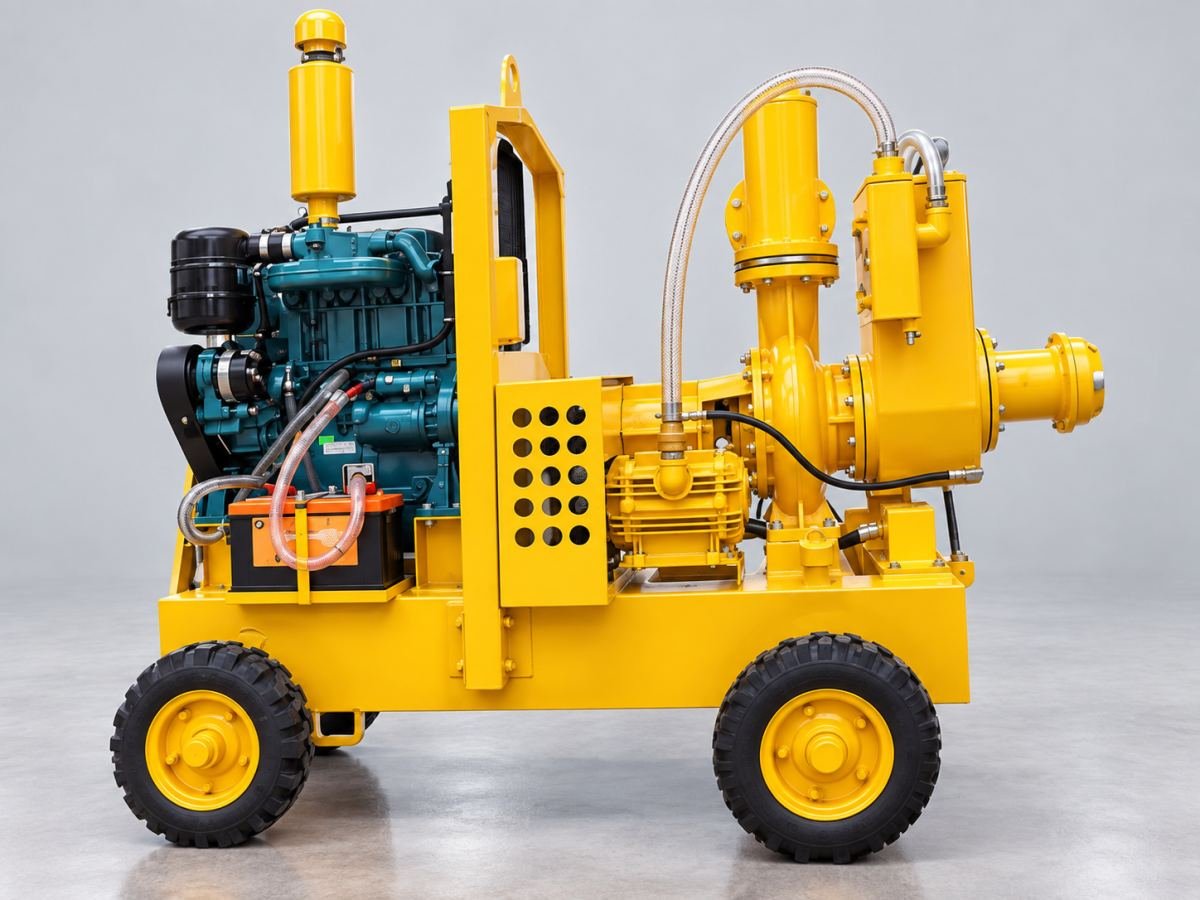
Temporary works such as excavation dewatering, bypass pumping and water transfer often raise the same question: should the pumps be rented for the job or purchased? There is no single right answer. The decision depends on how long the equipment is needed, how often it will be used afterwards, who will maintain it, and how the full cost compares over the life of the need. This article sets out the main considerations so a project team can make the choice on a clear basis.
Start with duration and certainty
The first question is how long pumping will be required, and how confident the team is in that estimate. A short excavation phase with a clear end date is a different situation from a groundwater control requirement that may extend as the programme changes. It is also worth asking what happens after this project: will the company have a recurring need for similar pumps, or is this a one-off requirement?
Whichever route is chosen, the technical starting point is the same. The pump must meet the duty point defined by flow, total head, suction conditions and fluid type. Maximum flow and maximum head do not necessarily occur together. Selection depends on the performance curve and operating duty. Accepting a pump that does not suit the duty simply because it can be obtained quickly is a common source of problems.
When rental tends to make sense
Rental is often considered where:
- The need is short or uncertain, such as a single excavation phase or an unplanned water ingress.
- Extra capacity is needed for peaks, for example during periods of heavy rainfall, alongside owned equipment.
- Standby units are required for a defined period.
- The project team has no maintenance or storage capacity for pumping equipment between jobs.
- Different sizes or configurations are needed at different stages of the works.
Rental does not remove the need to plan. Pricing, availability, operating responsibilities and the scope of any maintenance support are defined in the rental agreement for each project. The pump rental service page describes the information to share when discussing a rental.
When purchase tends to make sense
Buying is often considered where:
- Utilisation is high: the pumps will be used on this project for an extended period and on future projects.
- The organisation has maintenance capability, with trained staff, workshop facilities and access to spare parts.
- Standardisation matters: a consistent fleet of pumps, hoses and couplings simplifies spares, training and interchangeability between sites.
- Long-term or permanent duties are involved, where the equipment may later be integrated into ongoing operations.
For purchased equipment, the supply quotation confirms configuration, availability and delivery timing. More detail is available on the pump supply service page.
Compare the total cost, not just the headline rate
A rental rate and a purchase price are not directly comparable. A fair comparison looks at all of the costs that apply over the period of need. The table below lists typical items to consider; actual values come from the quotation or rental agreement and from your own internal costs.
| Cost item | Rental | Purchase |
|---|---|---|
| Equipment | Rental charges for the period, including any minimum term | Purchase price, less any value retained at the end of the need |
| Transport | Delivery and collection, as agreed | Delivery, and moves between your own sites |
| Accessories | Hoses, couplings and manifolds as included in the agreement | Purchased with the pump or separately |
| Fuel or power | Normally a site cost | Site cost |
| Maintenance and spares | As defined in the rental agreement | Your staff, parts and workshop time |
| Idle time and storage | Charges continue while on hire | Storage, preservation and capital tied up between jobs |
| Insurance and damage | As set out in the agreement | Your own cover |
Two items are often overlooked: the cost of idle equipment, whether rented or owned, and the cost of downtime if a pump fails and no replacement is available.
A mixed approach is also common: owning a core set of pumps for regular duties and renting additional or specialised units for peaks, standby or unusual site conditions. This keeps owned equipment well utilised while limiting the capital tied up in pumps that would otherwise sit idle for long periods between projects.
Clarify responsibilities before work starts
Many disputes on temporary works come from unclear responsibilities rather than equipment failures. Whether renting or buying, agree in writing:
- Who installs and commissions the pumps and accessories.
- Who operates, refuels and carries out daily checks.
- Who performs scheduled maintenance, and at what intervals.
- How breakdowns are reported and handled, and what support is included.
- Who is responsible for damage, loss and wear beyond normal use.
- The condition in which rented equipment must be returned.
For owned equipment, it is worth deciding at the outset whether maintenance will be handled in-house or through a service provider. The maintenance and repair service describes the information needed for an assessment, with repair scope confirmed after inspection.
Technical fit matters either way
The commercial route should never override the technical requirements. Before committing, check that:
- The duty point sits within the recommended operating range on the pump's performance curve.
- Suction conditions have been reviewed; suction lift is conditional and is not total head.
- The pump can handle the expected solids, and materials suit the water chemistry.
- Hoses, couplings and manifolds match the pump connections and the system's working pressure.
- Standby arrangements reflect the consequences of a pumping stoppage.
Talk through your options
If you are deciding between rental and purchase, share the flow, head, fluid type, project location and expected duration. SmartCo can discuss both routes for projects in Saudi Arabia and Bahrain, subject to the agreed service scope. Supply to Kuwait is discussed by arrangement.
Pump & Accessory Supply
We review duty requirements, configuration and accessories before preparing a supply quotation. Availability and delivery timing are confirmed in the quotation.
Pump Rental for Temporary Projects
Rent dewatering pumps for temporary works. Tell us the rental period, duty, site location and the accessories you need, and we will send you a rental offer.